I've spent enough years watching India's defence-industrial announcements go by to know the difference between a press-release milestone and an actual inflection point. Most "indigenous breakthrough" stories dissolve on inspection — a prototype here, a "successful trial" there, another five years of silence before the next update. This one didn't dissolve. It got more interesting the closer I looked.
On July 22, 2026, in a low-key handover ceremony in Hyderabad, DRDO's Gas Turbine Research Establishment (GTRE) took delivery of India's first expendable turbojet engine in the 350 kgf thrust class, jointly developed with Hyderabad-based Azad Engineering after nearly two years of collaborative work. No test-range fireworks. No missile plume. Azad Engineering's CEO Rakesh Chopra simply handed the unit to DRDO's Director General of Aeronautical Systems and GTRE's Director, while the DRDO Chairman praised the partnership as a model of scientific-industrial collaboration.
If you only follow headline-grabbing missile tests, you missed this entirely. That's a mistake, and I want to explain why.
Engines, Not Warheads, Are the Real Bottleneck
Here's my honest professional bias, developed over years of watching this sector: journalists and even some analysts systematically over-weight missile tests and under-weight propulsion milestones. A missile test is telegenic — it detonates, it makes a video, it fits a 90-second news segment. An engine handover is a man in a suit passing a metal cylinder to another man in a suit. Nobody claps.
"Warheads don't decide who sustains a campaign. Engines do. Sortie generation, drone-swarm economics, and a country's ability to keep precision weapons flowing after week three of a conflict — that's propulsion, full stop."
India's defence commentary has a blind spot here, and this engine is a useful case study in why that blind spot costs us understanding.
Why "Expendable" Is the Whole Point — Not a Compromise
Let's be precise about what was actually achieved, because I think the "expendable" qualifier gets read as a lesser achievement when it's actually the more strategically relevant one right now.
Unlike fighter aircraft engines built for thousands of operational hours, this turbojet is a single-use, single-mission propulsion system, optimised for simplicity, low production cost, and lightweight construction rather than durability. Fighter engines are a 20-year national commitment — India's Kaveri saga is the cautionary tale everyone in this field knows by heart. Expendable engines are a completely different engineering and industrial problem: build cheap, build fast, build a lot.
That's not a consolation prize. It's arguably the more consequential capability to master first, because it's the one the current era of warfare actually demands. I'd go further: I think India spent two decades chasing fighter-engine prestige when it should have prioritised exactly this tier of propulsion far earlier. This handover is India correcting that sequencing, whether or not anyone at GTRE would phrase it that bluntly.
Where It's Actually Going — and Why the List Should Worry Complacent Planners
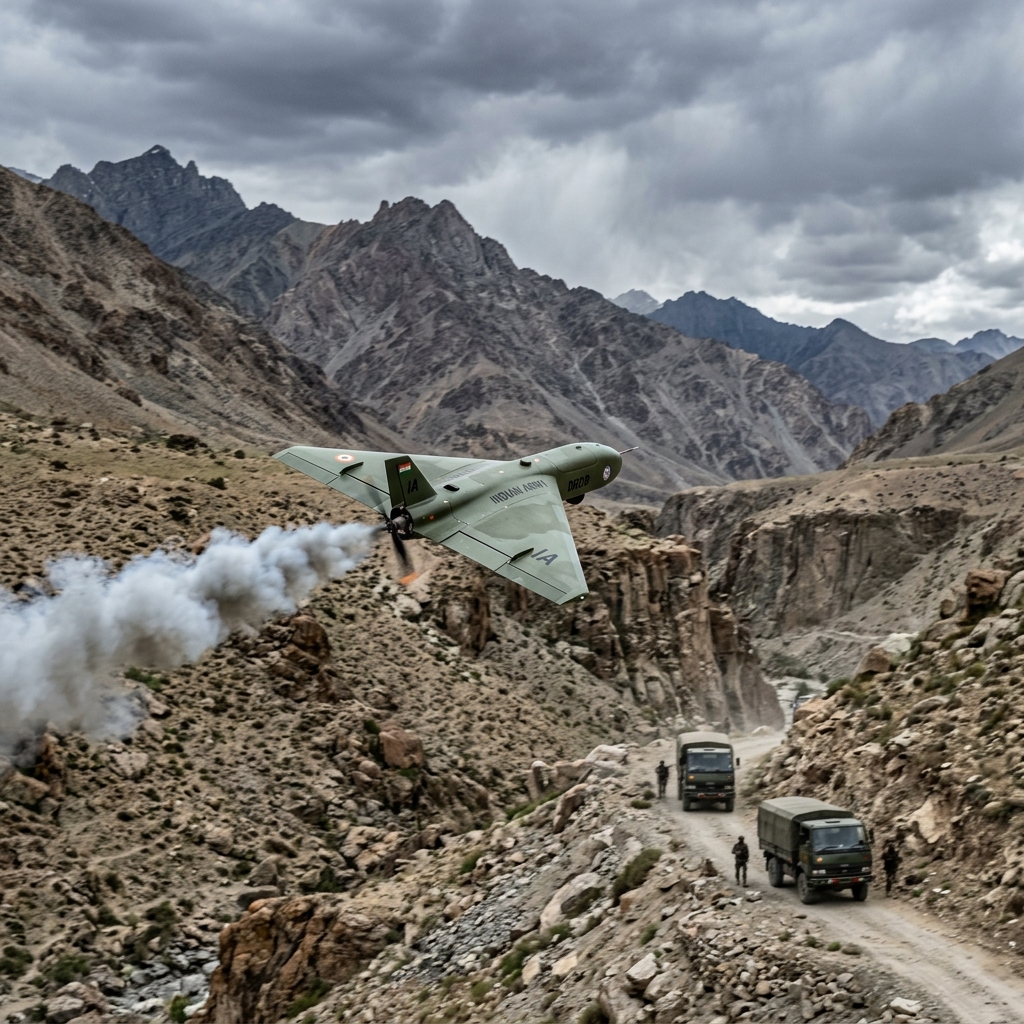
The engine is intended for cruise missiles, loitering munitions, high-speed target drones, decoy systems, and long-range UAVs. On paper, an unglamorous list. In practice, it's the exact inventory that has done the most damage in every conflict since 2022.
I'll say plainly what I think most Indian defence commentary tiptoes around: air-defence procurement across the region — including India's own — has been slower than the threat has evolved. Expensive, exquisite interceptor systems are being asked to defend against $500–$5,000 disposable threats, and the economics of that exchange favour the attacker every time. An indigenous, mass-producible expendable engine is India hedging its own future toward the attacker's side of that ledger, which is the correct strategic instinct even if it's an uncomfortable one to state out loud.
The Backstory That Makes This Personal, Not Abstract
To understand why I take this more seriously than the average wire-service writeup, you need the history.
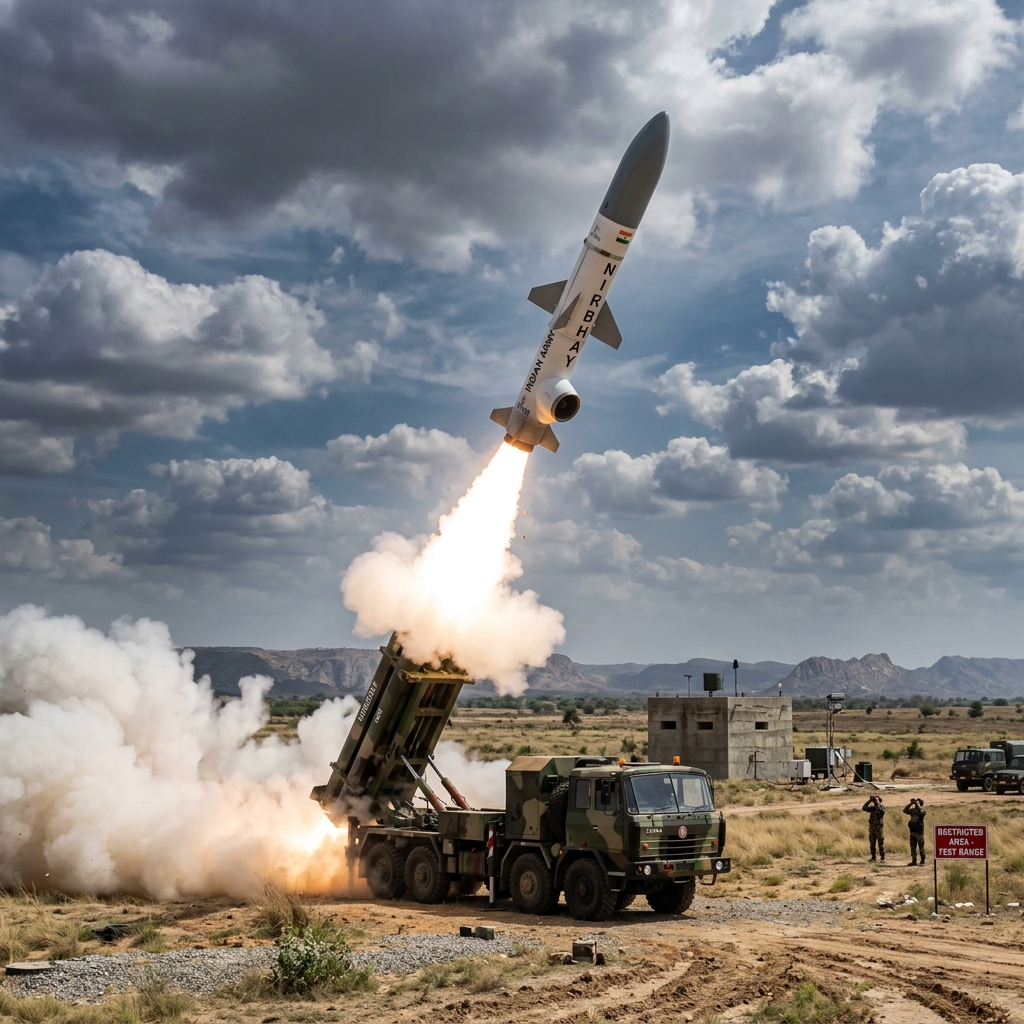
India's Nirbhay — the country's first indigenous cruise missile — originally ran on a Russian NPO Saturn 36MT engine, giving it a range of up to 1,000 km. That dependency wasn't a footnote. Early Nirbhay variants, powered by that same Russian engine, were deployed in limited numbers against China following the 2020 Galwan clashes — meaning at the exact moment India needed maximum confidence in a standoff-strike asset facing down the PLA, that asset's heart was built in Rybinsk, not Bengaluru. I don't think that fact gets enough attention in retrospectives on Galwan.
DRDO's corrective was the Manik engine, formally the Small Turbofan Engine (STFE). At 400 kgf thrust, GTRE-developed and, according to former DRDO chief Dr. S Christopher, more economical than the Russian alternative, Manik began displacing the imported engine through the early 2020s. It's an expendable 450 kgf-class turbofan purpose-built for subsonic drones and missiles — proof, in my view, that GTRE had already internalised the "cheap and expendable beats exquisite and imported" lesson before most of the world's militaries had.
The new 350 kgf turbojet isn't a replacement for Manik. It's a lighter sibling, filling a lower thrust band that India's expanding drone and loitering-munition inventory genuinely needs. Between the two, India now has a fairly complete indigenous propulsion ladder across the expendable class — a state of affairs that, frankly, I did not expect to see this decade.
The Demand Side Is Already Real, Not Hypothetical
What convinces me this isn't a lab curiosity is how much genuine demand already exists downstream.
- By March 2026, India's armed forces were operating over 140 UAV platforms across nine categories — up from fewer than twelve in 2020, a scaling curve driven by Galwan and by lessons from Operation Sindoor in 2025.
- The Army has already fielded the DRDO–Adani ULPGM, India's first indigenous loitering munition in its category, with a 20 km UAV range, 2.5 km strike range, and one-metre accuracy even under GPS jamming.
- Nagastra-1, inducted from 2024, became the first indigenously developed loitering munition to enter active Indian service.
- SMPP has signed a technology-transfer agreement with Europe's KNDS specifically to domestically manufacture loitering munitions at the volume the Army is now demanding.
Every one of these programmes is propulsion-hungry. My honest assessment: India's airframe and seeker technology for this weapons class has been outpacing its indigenous engine supply for at least two years. This handover doesn't create a market — it finally starts feeding one that already exists and has been running on imports and stopgaps.
The Uncomfortable Geopolitical Point
I'll state this more directly than most coverage has: Russia was India's original engine supplier for Nirbhay, and Russia has spent years fighting a war that has visibly strained its own defence-industrial base. If you are still dependent on Moscow for spare engines for your own strategic cruise missile at the moment your own regional tensions escalate, you are exposed in a way no serious planning staff should accept.
"An indigenous expendable-engine line isn't about Atmanirbhar Bharat symbolism. It's basic wartime supply-chain hygiene. When your precision-strike inventory is built on consumable engines, your production line cannot run through someone else's conflict."
I consider this the single most important — and least discussed — strategic implication of the July 22 handover.
Private Industry Is Now Inside the Engine Room
One more thing I don't think has been given proper weight: Azad Engineering's role here.
Propulsion has traditionally been the most closely guarded technology inside India's defence establishment — more so than airframes, more so than software, arguably more so than sensors. Watching a private Hyderabad manufacturer co-develop and physically hand over a turbojet engine to DRDO is, in my assessment, a bigger structural shift than the engine's specifications alone suggest.
It fits a pattern I've been tracking: Adani Defence has become the first private Indian company entrusted with a complex airborne mission platform, building six modified Airbus A321s for the AEW&C-Mk2 programme. Between Adani in mission systems and Azad in propulsion, India's private sector is being handed genuinely sensitive core technology — not the assembly-line subcontracting it was historically confined to. If this trend holds, I'd expect India's next major propulsion surprise to also come with a private-sector name attached, not just a DRDO lab.
Where I'd Push Back on the Optimism
I don't want to overstate this, and I think a lot of enthusiastic coverage will. A few honest caveats, from where I sit:
- This is not, and was never going to be, a fighter-engine breakthrough. The Kaveri revival is a separate track feeding the Ghatak stealth UCAV, and the AMCA's actual fighter engine is being co-developed with France's Safran — that programme remains years out and unresolved. Conflating the two would be a category error.
- One handover is not mass production. Reliability data at volume, integration into a fielded weapon, and consistent manufacturing yield from Azad Engineering's line still need to be demonstrated before I'd call this "solved."
- Expendable engines are, engineering-wise, a genuinely easier problem than reusable propulsion. I'd caution against reading this as proof that India has closed its broader propulsion gap with the US, Russia, France, or the UK. It hasn't. It has closed one specific, narrower gap — and that's still worth taking seriously, just not overselling.
My Bottom Line
Missiles make headlines because they explode on camera. Engines get ignored because they hum quietly in a workshop and then disappear inside a weapon nobody photographs mid-flight. But I'd argue the engines are where the actual war-fighting capacity gets decided — sortie rates, swarm economics, and whether a country can sustain a strike campaign past the opening week.
Ukraine's drone swarms have already demonstrated how hundreds of cheap, expendable units can overwhelm defences that cost orders of magnitude more to field. My view is that India's answer to that lesson isn't going to arrive as a single dramatic unveiling — it's going to arrive exactly like this did: quietly, in Hyderabad, as a small engine changing hands between two men who understood its significance far better than the news cycle did.
Watch for this engine, or its immediate successors, to show up unannounced inside India's next loitering-munition induction or long-range land-attack cruise missile test. When it does, remember it did the real work months earlier — on a Tuesday, with no cameras rolling.
Sources
- IBG News — Full engine specifications, handover details, technical data
- Medium — Nirbhay's original NPO Saturn 36MT engine dependency
- Swarajya Mag — Manik/STFE engine replacing Russian propulsion in Nirbhay
- Bharatpedia — Manik/STFE engine and the ITCM programme
- SSBCrack — India's 2026 UAV and loitering-munition inventory
- ANI — ULPGM and AGNIKAA VTOL-1 induction details
- Indian Masterminds — SMPP–KNDS loitering munition technology transfer
- Indian Defence News — Adani Defence's AEW&C-Mk2 role and IAF's 60+ indigenous programmes
- BestSev7en — Ukraine drone swarm battlefield economics